
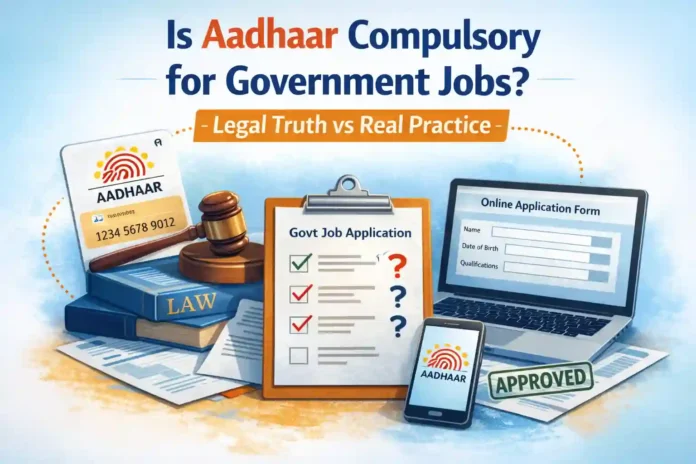
Aadhaar अब ज़्यादातर government hiring processes का main base बन चुका है। यह समझना बहुत ज़रूरी है कि कब यह legally required होता है और कब सिर्फ practical convenience के लिए use किया जाता है, ताकि आप last-minute rejection, application errors, और bureaucratic problems से बच सकें। Aadhaar legally आपका application directly block न करे, लेकिन practical level पर अगर आपके पास Aadhaar नहीं है तो आपके chances quietly कम हो सकते हैं। Law और ground reality के बीच का यही difference आज के recruitment system को define करता है। Supreme Court ने Aadhaar का mandatory use subsidies और welfare schemes तक limit किया था, लेकिन recruitment systems, verification processes, और salary infrastructure धीरे-धीरे Aadhaar पर ज़्यादा dependent हो गए हैं।
यह मत समझो कि Aadhaar हमेशा Compulsory है
बहुत से candidates government jobs के लिए apply ही नहीं करते क्योंकि उनके पास Aadhaar card नहीं होता और वे मान लेते हैं कि उन्हें automatically disqualify कर दिया जाएगा। यह सोच गलत है। 2018 के five-judge Constitution Bench judgment Justice K.S. Puttaswamy v. Union of India में Supreme Court ने clearly कहा था कि Aadhaar को उन services के लिए mandatory नहीं बनाया जा सकता जो government subsidies, benefits, या welfare schemes नहीं हैं जो Consolidated Fund of India से funded होती हैं। Employment subsidy category में नहीं आता।
लेकिन recruitment authorities अक्सर अपने अलग rules बनाती हैं, department-specific circulars issue करती हैं, और ऐसे verification processes follow करती हैं जिससे Aadhaar practical level पर almost essential बन जाता है। इसलिए बिना Aadhaar apply करने का decision लेने से पहले हर official notification ध्यान से पढ़ें।
Government Job Applicants के लिए Aadhaar से जुड़ी ज़रूरी बातें
- Aadhaar (Targeted Delivery of Financial and Other Subsidies, Benefits and Services) Act, 2016 India में Aadhaar के use को regulate करता है।
- इस Act का Section 7 government को सिर्फ subsidies और benefits के लिए Aadhaar mandatory बनाने की permission देता है जो Consolidated Fund of India से funded होते हैं।
- Government employment एक salaried position है, इसे Section 7 के under subsidy या benefit नहीं माना जाता। इसका मतलब है कि job applications के लिए blanket mandatory Aadhaar का strong legal base नहीं है।
- लेकिन joining के बाद salary disbursement through Public Financial Management System (PFMS), Employees’ Provident Fund Organisation (EPF registration), और Direct Benefit Transfer (DBT)-linked allowances के लिए Aadhaar को bank account से link करना अक्सर ज़रूरी होता है।
- Aadhaar Enabled Biometric Attendance System जैसे biometric attendance systems Aadhaar-based authentication use करते हैं, इसलिए joining के बाद Aadhaar practically necessary बन जाता है।
- कई state governments Public Service Commission recruitments के document verification stage पर Aadhaar mandatory करने वाले circulars issue करती हैं। यह universal law नहीं बल्कि department-specific rules होते हैं।
- अगर आपने Aadhaar के लिए apply किया है लेकिन अभी receive नहीं हुआ, तो central government recruitment processes में Aadhaar Enrolment ID (EID) को temporary document के रूप में use किया जा सकता है।
Government Recruitment के Different Stages में Aadhaar Requirement
| Stage | Aadhaar Required? | Alternate Documents Accepted? | Legal Basis |
|---|---|---|---|
| Online Application Form | Usually optional | हाँ — PAN, Passport, Voter ID accepted | Supreme Court 2018 Judgment और recruitment rules |
| Admit Card / Hall Ticket | नहीं | N/A | Exam-specific guidelines |
| Exam Centre Verification | Preferred but not exclusive | हाँ — Government photo ID accepted | Notification instructions |
| Document Verification | कई states में increasingly required | State/department के हिसाब से अलग | PSC/department circulars |
| Appointment & Joining | Practical level पर almost essential | Transition period में EID slip accepted | AEBAS और PFMS rules |
| Salary Disbursement (DBT) | हाँ — Aadhaar-bank linking required | Limited exceptions | PFMS और Finance Ministry directives |
Ground Reality में क्या होता है?
Indian government recruitment में laws और actual practice हमेशा match नहीं करते — Aadhaar इसका perfect example है। Different recruitment bodies में process आमतौर पर इस तरह काम करता है:
Central Government Recruitments (SSC, UPSC, Railways, Banking)
ज़्यादातर central recruitment notifications application stage पर Aadhaar को mandatory mark नहीं करते। Staff Selection Commission की exams — जैसे SSC Combined Graduate Level Examination (CGL) और SSC Combined Higher Secondary Level Examination (CHSL) — candidates को exam centre verification के लिए किसी भी valid government-issued photo ID का use करने की permission देती हैं।
लेकिन final document verification और appointment stages पर Aadhaar अक्सर effectively necessary बन जाता है क्योंकि Aadhaar Enabled Biometric Attendance System और Public Financial Management System (PFMS) से जुड़े requirements होते हैं।
State Government PSC Recruitments
यहाँ सबसे ज्यादा variation देखने को मिलता है। Rajasthan, Madhya Pradesh और Uttar Pradesh जैसे states ने PSC-specific rules जारी किए हैं। इन rules में document verification पर Aadhaar जरूरी होता है। कई Northeastern states और Union Territories ज्यादा flexible रहे हैं। पूरे देश में एक जैसा rule मत समझिए। हमेशा specific state notification ध्यान से पढ़ें।
Police and Defence Recruitment
Police constable, sub-inspector, और paramilitary roles जैसे posts के physical verification और medical rounds में Aadhaar लगभग हमेशा required identity document bundle का हिस्सा होता है। इन stages पर authorities अक्सर collected biometric data को Aadhaar records से cross-check करती हैं ताकि identity accuracy ensure की जा सके।
Teaching and Education Department Posts
Central Teacher Eligibility Test (CTET) और अलग-अलग state-level TET exams आमतौर पर online application stage पर Aadhaar को optional रखते हैं। लेकिन qualification के बाद appointment process शुरू होने पर ज़्यादातर states के school education departments salary integration के लिए Aadhaar require करते हैं।
सीधी और ईमानदार conclusion यही है: application stage पर Aadhaar को universally mandatory बनाने वाला कोई single law नहीं है, लेकिन जो candidate seriously government job secure करना चाहता है उसे Aadhaar जितना जल्दी हो सके बनवा लेना चाहिए। Selection के बाद verification, onboarding, और salary processing stages में Aadhaar न होने की practical difficulties बहुत तेज़ी से बढ़ जाती हैं।ease sharply after selection, especially during verification, onboarding, and salary processing.